Rotorua & Wai-O-Tapu (Te Rotorua-nui-a-Kahumatamomoe)
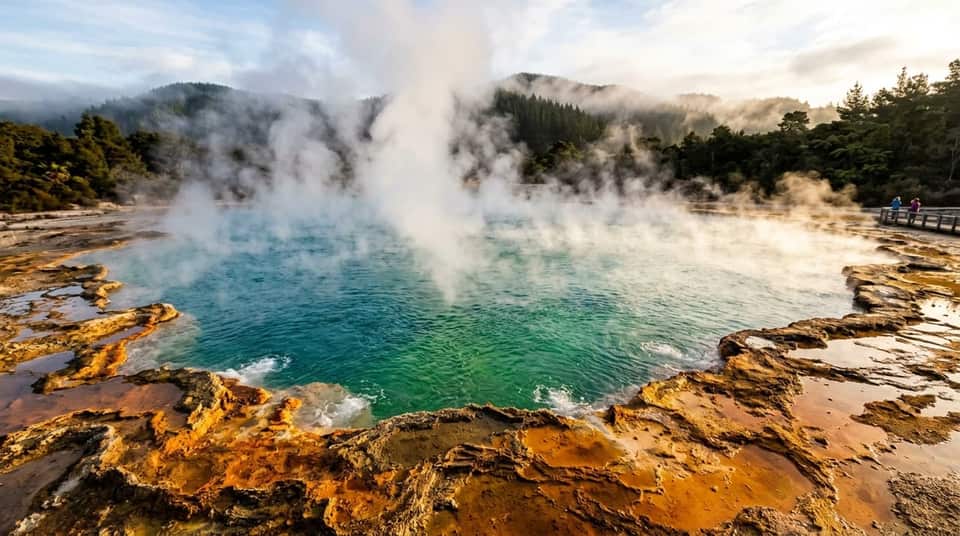
Steaming primordial earth of emerald craters, ochre terraces & geysers
Nordinsel · 2 days · GPS: -38.3592, 176.3686
Te Reo Māori: Rotorua · Wai-O-Tapu (Raw-taw-roo-ah · Why-aw-tah-poo · /ɾɔtɔˈɾua waiɔˈtapu/) — Second great lake & sacred geothermal waters
Region: Te Arawa & Central Volcanic Plateau (Te Arawa & Tūwharetoa · Living Earth)
Portrait of This Sanctuary
Here you feel Earth’s pulse right beneath your boots. Around Rotorua and Wai-O-Tapu, plumes of white steam curl from bubbling mud pools and vivid mineral springs—crowned by the emerald waters and glowing orange silica rim of the Champagne Pool.
Sitting atop the active Taupō Volcanic Zone, Rotorua reminds you with every breath how thin Earth’s crust lies here. Plumes of steam rise from parks and lakeshores framed by lush native forest.
Thirty minutes south, Wai-O-Tapu—“Sacred Waters”—displays nature’s full geothermal palette of neon pools, ochre silica terraces, and the continuously fizzing Champagne Pool.
Destination Dossier
- Elevation & Climate Feel
- 280–390 m above sea level · Warm geothermal & mineral-rich
- Best Season
- Year-round · May – Sept. (thickest steam)
- Signature Scenery
- Geothermisch, Vulkanisch
- Your Goosebump Moment
- Stepping across wooden boardwalks wrapped in warm sulfur mist at morning until the veil parts to reveal the steaming, orange-rimmed Champagne Pool.
- Best Light & Photography Tip
- Early morning in cool, clear air when steam columns rise thickest and low sunlight backlights the vapor in gold.
- Arrival & Orientation
- Roughly 3 hours south of Auckland via SH1 and SH5; Wai-O-Tapu sits 27 km south of Rotorua toward Taupō.
Sensory Impressions On Site
Rhythmic bubbling of thermal mud pools & deep hissing from steaming fumaroles
Warm mineral steam on the skin, crisp sulfur & damp mānuka scrub
72% volcanic rawness (72%)
Local Secrets & Field Notes
- Arrive at Wai-O-Tapu for the 8:30 a.m. opening before mid-morning tour buses arrive.
- Pair daytime craters with an evening Māori cultural experience featuring hāngī earth-oven dining.
- A twilight stroll among the towering trunks and suspended bridges of the Redwood Forest makes a serene finish.
Behind the Postcard & Tiaki
Rotorua verkörpert sowohl gelebte Māori-Gastfreundschaft (Manaakitanga) und die Stärkung von Te Reo Māori als auch den sozialen Kontrast zwischen weltbekannten Geothermalparks, Wohnungsengpässen vor Ort und Debatten über faire Teilhabe im Rahmen von Te Tiriti o Waitangi.
Te Tiriti & Indigene Rechte
Buche direkt bei authentischen, Iwi- und Whānau-geführten Kultur- und Thermalprojekten, damit Wertschöpfung und kulturelle Deutungshoheit in den Händen der Gemeinden vor Ort bleiben.
Dream Routes Featuring This Stop
- Culture, Myth & Middle-earth — Sacred Māori sites, geothermal earth forces & cinematic worlds
- Families & Relaxed Explorers — Gentle trails, golden coves, and natural wonders without rush
- Car-Free Aotearoa (Hop-on Hop-off Classic) — 21 days from Pacific bays to Fiordland — 100% by bus pass, ferry & day shuttles
FAQ
How many days do you need for Rotorua & Wai-O-Tapu and when is the best time to visit?
Plan 2 days for Rotorua & Wai-O-Tapu. The best season is Year-round · May – Sept. (thickest steam), with standout photography and atmosphere during: Early morning in cool, clear air when steam columns rise thickest and low sunlight backlights the vapor in gold..
Where is Rotorua & Wai-O-Tapu located in New Zealand and what is the climate like?
Rotorua & Wai-O-Tapu sits in the Te Arawa & Central Volcanic Plateau region (Nordinsel, GPS: -38.3592, 176.3686) with 280–390 m above sea level and a Warm geothermal & mineral-rich profile.
How do you pronounce Te Rotorua-nui-a-Kahumatamomoe in Te Reo Māori and what does it mean?
Te Rotorua-nui-a-Kahumatamomoe is pronounced "Raw-taw-roo-ah · Why-aw-tah-poo" (IPA: /ɾɔtɔˈɾua waiɔˈtapu/). Meaning: Second great lake & sacred geothermal waters.