Tasman Glacier & Blue Lakes (Haupapa)
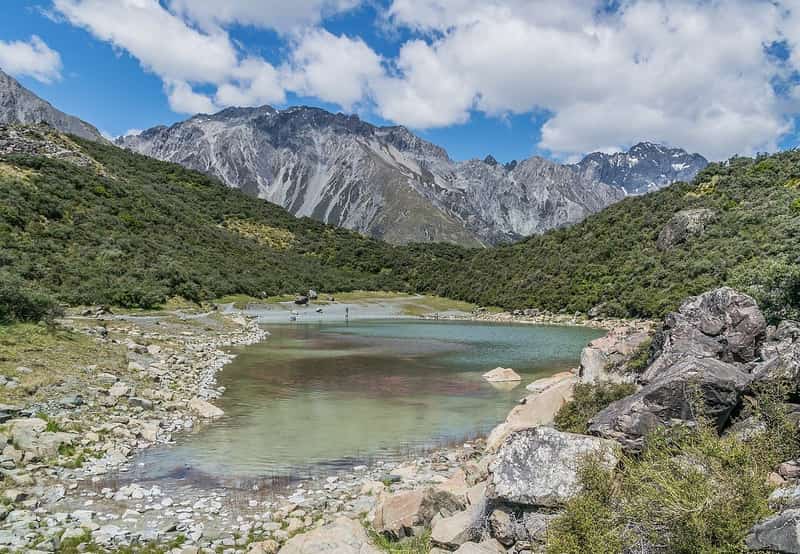
Floating icebergs on the terminal lake of New Zealand’s longest glacier
Südinsel · 1 day · GPS: -43.6980, 170.1680
Te Reo Māori: Haupapa (How-pah-pah · /hauˈpapa/) — Ice sheet / frost (Tasman Glacier)
Region: Mackenzie High Country & Aoraki (Te Manahuna · Golden Tussock & Dark Sky Sanctuary)
Portrait of This Sanctuary
Adjacent to the Hooker Valley in Aoraki/Mount Cook National Park, a short boulder stair climbs the lateral moraine wall of Haupapa (Tasman Glacier)—stretching 23 kilometres down from the Divide. Far below, sculpted blue icebergs drift silently across the milky proglacial lake.
A ten-minute drive from Mount Cook Village leads into the Tasman Valley beside Haupapa—at 23 kilometres still New Zealand’s longest glacier. A stepped trail climbs the sharp lateral moraine crest to sweeping views over vast Tasman Lake.
Sculpted blue icebergs calved from the terminal face drift silently across milky glacial water beneath the 3,000-metre eastern walls of Aoraki and Mount Tasman.
Destination Dossier
- Elevation & Climate Feel
- 730 m above sea level (terminal lake) · High-alpine crisp & glacial
- Best Season
- November – April (open water & drifting icebergs)
- Signature Scenery
- Gletschereis, Hochalpin, Bergsee
- Your Goosebump Moment
- Hearing the distant thunder of ice calving off the terminal face while sculpted blue bergs drift across Tasman Lake below.
- Best Light & Photography Tip
- Early morning light slanting across the eastern face of Aoraki and illuminating translucent blue ice.
- Arrival & Orientation
- 10 minutes by sealed road from Aoraki/Mount Cook Village to the Tasman Valley carpark.
Sensory Impressions On Site
Faint crackle of drifting blue icebergs in Tasman Terminal Lake below NZ’s longest glacier
Icy moraine air at 800 metres, raw alpine schist & diamond-sharp Dark Sky starlight
96% glacial ice-lake silence (96%)
Local Secrets & Field Notes
- Climb the Blue Lakes and Tasman Glacier Viewpoint stairs at sunrise when golden light hits Aoraki’s eastern face.
- In warmer months, join a small-boat glacier lake excursion to inspect translucent blue icebergs up close.
- Also walk the flat 20-minute Tasman River track to the lake outlet where grounded bergs often gather.
FAQ
How many days do you need for Tasman Glacier & Blue Lakes and when is the best time to visit?
Plan 1 day for Tasman Glacier & Blue Lakes. The best season is November – April (open water & drifting icebergs), with standout photography and atmosphere during: Early morning light slanting across the eastern face of Aoraki and illuminating translucent blue ice..
Where is Tasman Glacier & Blue Lakes located in New Zealand and what is the climate like?
Tasman Glacier & Blue Lakes sits in the Mackenzie High Country & Aoraki region (Südinsel, GPS: -43.6980, 170.1680) with 730 m above sea level (terminal lake) and a High-alpine crisp & glacial profile.
How do you pronounce Haupapa in Te Reo Māori and what does it mean?
Haupapa is pronounced "How-pah-pah" (IPA: /hauˈpapa/). Meaning: Ice sheet / frost (Tasman Glacier).