East Cape & Tairāwhiti (Te Tai Rāwhiti · Hikurangi)
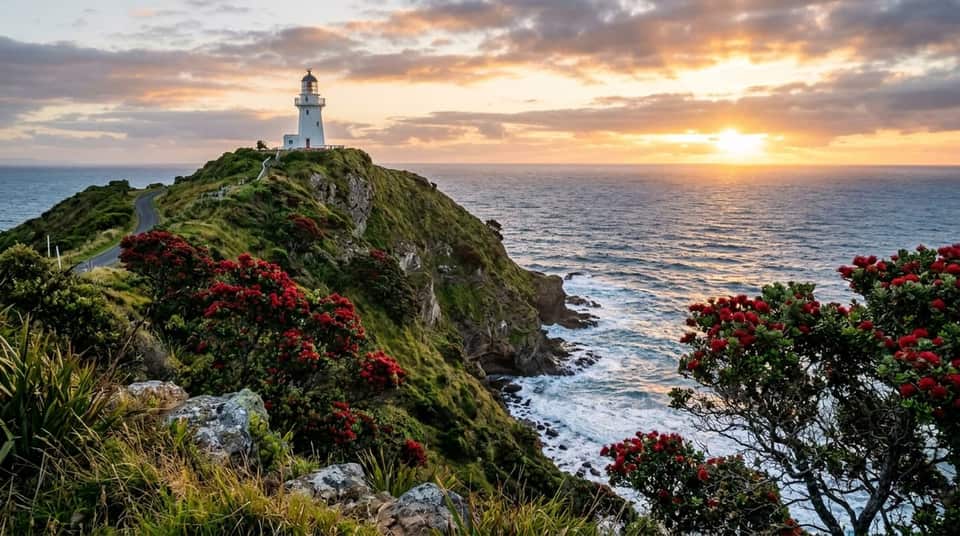
Coast of Earth’s very first sunrise between pōhutukawa bays and Māori heritage
Nordinsel · 2 days · GPS: -37.6892, 178.5472
Te Reo Māori: Te Tai Rāwhiti · Hikurangi (Teh Tye Rah-fee-tee · Hee-koo-rah-ngee · /tɛ tai ˈɾaːfiti/) — The coast where the sun rises first
Region: East Cape, Tairāwhiti & Hawke’s Bay (Te Tairāwhiti & Te Matau-a-Māui · Coast of First Light)
Portrait of This Sanctuary
At mainland New Zealand’s easternmost edge, Tairāwhiti greets every new day ahead of the rest of the world. Along the quiet Pacific Coast Highway stretch Tolaga Bay’s historic timber wharf, intricately carved Ngāti Porou meeting houses, and the solitary East Cape lighthouse perched high above the endless Pacific.
Following State Highway 35 around remote East Cape leaves hurried travel far behind. Across Tairāwhiti—“the coast where sunlight shines across the water”—life moves to horses cantering along empty beaches, intricately carved Ngāti Porou marae like St Mary’s Church at Tikitiki, and ancient crimson-flowering pōhutukawa.
At mainland New Zealand’s easternmost lighthouse above Otiki, the very first dawn rays of the new calendar day strike the cliffs—while south around Gisborne and horseshoe-shaped Tolaga Bay await long surf breaks, Chardonnay cellar doors, and natural rock waterslides.
Destination Dossier
- Elevation & Climate Feel
- 0–154 m (East Cape Lighthouse) · Warm Pacific & light-drenched
- Best Season
- October – May (first sunrise on Earth)
- Signature Scenery
- Pazifikstrand, Steilküste
- Your Goosebump Moment
- Climbing the 700 steps to East Cape Lighthouse under fading stars and watching the golden sun break out of the Pacific among the first people on Earth.
- Best Light & Photography Tip
- First dawn break at East Cape Lighthouse or along the historic wharf at Tolaga Bay.
- Arrival & Orientation
- Via Pacific Coast Highway (SH35), roughly 2.5 hours north of Gisborne or 3 hours east of Whakatāne.
Sensory Impressions On Site
First Pacific surf of the waking planet & seabirds gliding past East Cape lighthouse
Crisp dawn salt air, crimson pōhutukawa blossoms & sun-bleached driftwood
93% remote sunrise coast (93%)
Local Secrets & Field Notes
- Stay overnight near Te Araroa so you are only 25 minutes along the coastal gravel road from East Cape Lighthouse before first light.
- Walk the full 660-meter length of historic 1929 Tolaga Bay Wharf and combine it with the scenic Cooks Cove Walkway.
- Top up fuel in Ōpōtiki or Gisborne beforehand, as petrol stations along quiet SH35 bays are spaced far apart.
Dream Routes Featuring This Stop
- Campervan Freedom & Quiet Backroads — Forgotten highways, remote capes, and golden high country far from the crowds
FAQ
How many days do you need for East Cape & Tairāwhiti and when is the best time to visit?
Plan 2 days for East Cape & Tairāwhiti. The best season is October – May (first sunrise on Earth), with standout photography and atmosphere during: First dawn break at East Cape Lighthouse or along the historic wharf at Tolaga Bay..
Where is East Cape & Tairāwhiti located in New Zealand and what is the climate like?
East Cape & Tairāwhiti sits in the East Cape, Tairāwhiti & Hawke’s Bay region (Nordinsel, GPS: -37.6892, 178.5472) with 0–154 m (East Cape Lighthouse) and a Warm Pacific & light-drenched profile.
How do you pronounce Te Tai Rāwhiti · Hikurangi in Te Reo Māori and what does it mean?
Te Tai Rāwhiti · Hikurangi is pronounced "Teh Tye Rah-fee-tee · Hee-koo-rah-ngee" (IPA: /tɛ tai ˈɾaːfiti/). Meaning: The coast where the sun rises first.